
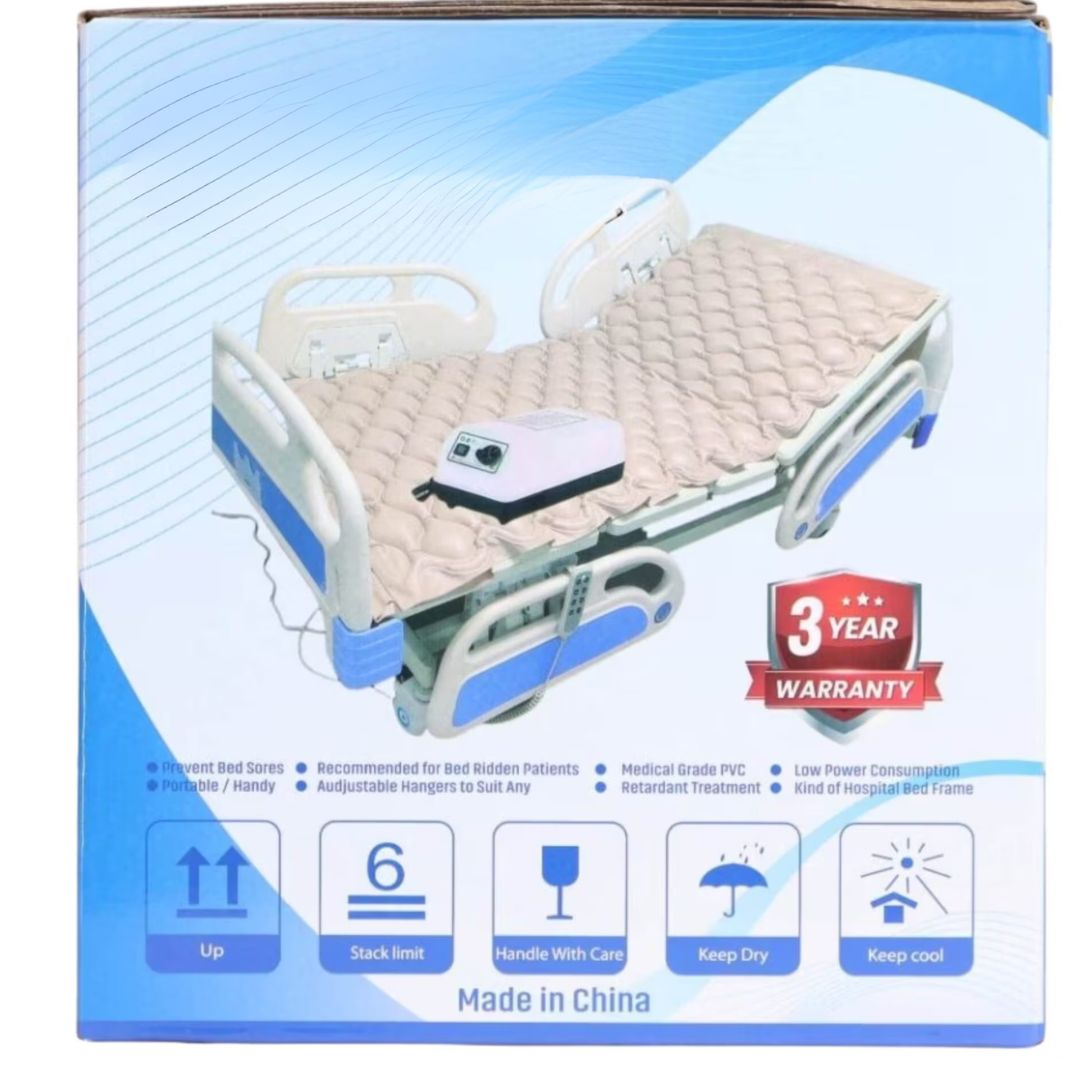


Key Features & Specifications
When selecting a medical air mattress, consider these important features:
- Adjustable Pump: Quiet pump with customizable pressure and cycle settings for comfortable use.
- Cell-on-Cell Structure: Provides an additional air-cell layer underneath for continued support during temporary power interruptions.
- Raised Side Edges: Firmer perimeter helps provide added stability and assists caregivers during patient transfers.
- Heel Support: Sloped design helps reduce pressure around the heel area.
- Protective Cover: Designed with patient comfort and easy maintenance in mind.
- Fluid-Resistant Material: Helps protect the mattress from liquid spills while allowing moisture vapor to escape.
- Low-Friction Surface: Helps minimize friction and shear during movement or repositioning.
- CPR Valve: Enables quick air release when rapid mattress deflation is required.
- Safety Alarms: Certain models may include alerts for low pressure or power-related issues.
- Suitable Dimensions: Select a mattress size that matches the intended bed frame.
- Weight Capacity: Check the maximum supported weight before purchase.
How a Medical Air Mattress Works
A medical air mattress uses air-filled cells and a pump to periodically change pressure across different areas of the mattress.
- Pressure Redistribution: Alternating inflation and deflation helps distribute pressure across different body areas.
- Circulation Support: Regular pressure changes can help reduce prolonged pressure on specific areas.
- Moisture Management: Some models use low-air-loss technology to circulate air around the body and help maintain a cooler, drier surface.
- Comfortable Support: Continuous pressure adjustment provides a more dynamic and supportive surface compared with a conventional mattress.



Reviews
There are no reviews yet.